Waxed vs. Unwaxed Boxes: The Complete Guide for Farmers
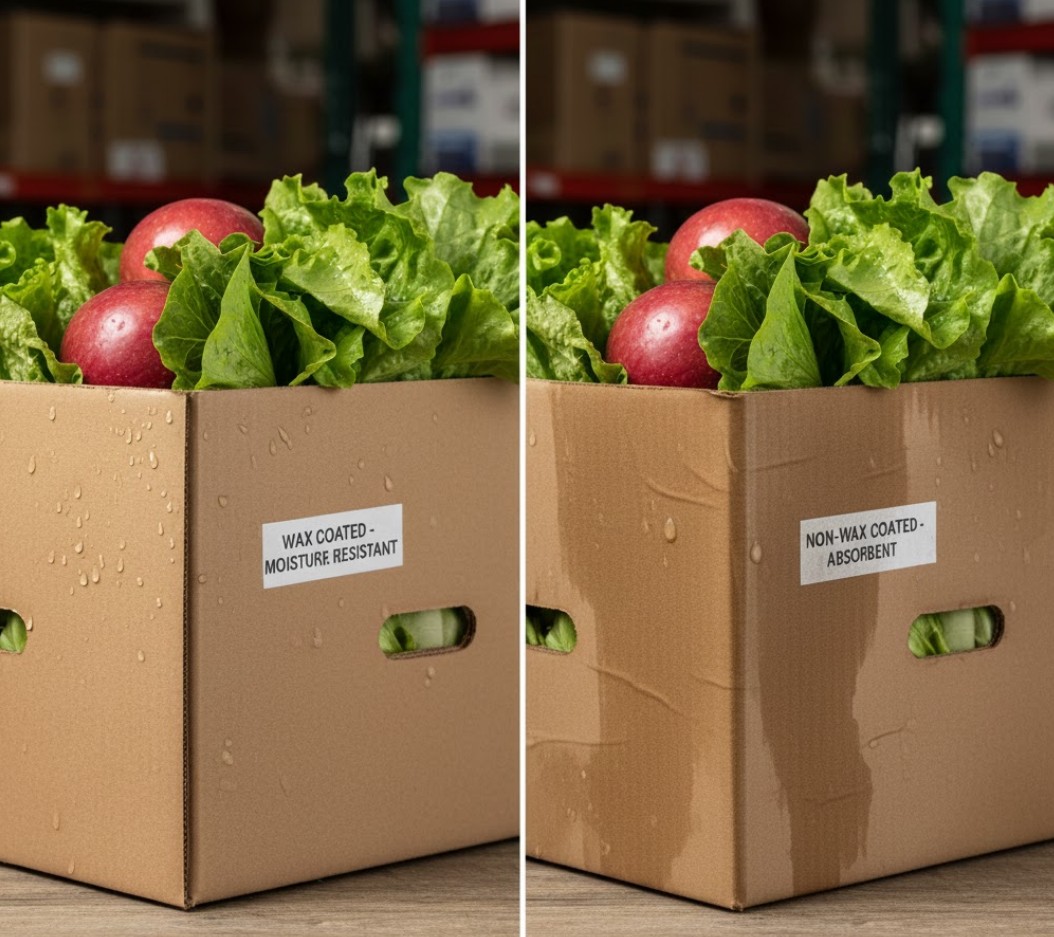
Choosing the right box determines if your crop arrives fresh or spoiled. As a packaging manufacturer, we get asked this daily by farmers across Texas and the South. The answer depends on your crop, your cooling method, and how far your produce travels before it reaches the retailer or packer.
Waxed boxes are coated with a thin layer of paraffin or polyethylene wax that makes them highly resistant to moisture. If your operation uses hydro-cooling, ice injection, or top-icing, waxed boxes are essential. Standard unwaxed corrugated boxes lose up to 75 percent of their stacking strength when saturated with water, which means a pallet that looked stable when loaded can collapse in transit. Waxed boxes maintain their strength even after prolonged exposure to ice and cold water, protecting your product all the way to the dock.
Unwaxed boxes are the right choice when moisture is not a factor. They cost less per unit, are fully recyclable curbside, and perform just as well as waxed boxes in dry, ambient conditions. For crops like onions, potatoes, and dry grains that do not require ice or high-humidity cooling, unwaxed RSC boxes with a strong ECT rating are the more economical and sustainable choice.
The decision also depends on your buyer requirements. Many large grocery chains and distributors specify waxed boxes for certain commodities as a condition of purchase. If you are selling to a packer or distributor for the first time, ask about their box specifications before you order your seasonal supply. Getting the wrong box type can mean rejected loads at the dock.
At Supply Carton, we stock both waxed and unwaxed options in the most common produce sizes and can help you select the right specification for your crop. Call us at (469) 489-4999 or use our contact form to get a quote before your next harvest.